Showing posts with label Zen. Show all posts

Saturday, December 22, 2012

It's all just relaxing

 
In aikido we learn to relax in movement.

In kyudo we learn to relax while doing something impossible.

In zazen we learn to relax while being human.

It's all just different kinds of relaxing, and all you have to do is just ... relax.

But you can't "just relax". I went to onsen today, and I didn't have anything to do. There was nothing directly in the world that I could say was interfering with my relaxing, and I was arguably in the most relax-easy place in the world. Yet, I was still holding my body instead of letting it go as I've experienced before, and I had something in my mind I couldn't let go of, but it wasn't anything in particular.

You have to practice "just relaxing", but while doing something else. I think "just relaxing" in its essence is sleeping. But when we're awake and we want to relax, we are essentially doing something as well, right? Even if we're sitting there just thinking. It's not "just relaxing", but relaxing while doing something else.

Why can't we "just relax"?

Monday, October 15, 2012

the "Art" in "Martial Arts": Part One of Many

 
I think in images. They are followed by feelings. This is largely how I make decisions in my life.

As a young boy, I was a drawer. Of all the childhood activities that were scattered through my time, it was putting a pencil to blank white paper where I practiced with the most enthusiasm. I remember it well: the complete freedom of a blank page, that one simple instrument. I didn't erase much. If I did, the previous line would be replaced by a better one, and I would move on. I would draw a picture for maybe thirty minutes to an hour, then put it somewhere never to be seen or thought of again.

 
I don't draw anymore. Since then I've attempted several returns to that age, but they just don't work. So, I don't try it often. The great change came with puberty. A maturation of muscles and development of desire in a social world ushered in an age of physical activity: namely organized sports and skateboarding. A creature of activity, satiated only by physical motion. But not just physical motion itself, physical motion with a goal. I'll get back to that in a second.

I am still like that, I think. My life is largely determined by physical motion. The difference is that it started in organized team sports and has evolved into practicing Japanese martial arts; namely aikido and kyudo. (One interesting constant though has been board sports, skateboarding when I was in middle and high school, and snowboarding now in Japan). I said "Japanese martial arts", because it's a very specific practice within the umbrella of "martial arts" as a whole: its differences greatly affect my experience of martial arts. One of the most intelligible differences can be found in the suffix "dou" (karate-do, aiki-do, kyu-do, etc). But that is a topic worthy of another post to come. What is relevant to this discussion is the image of Japanese martial arts, and the feelings produced from those images and its practice. I express my tendency to images by being interested in the image of Japanese martial arts, and by most of all being the image by participating. By participating in the art, I am using my physical body in motion, and the combination of my imagination working with the images and my body with the physical world, a certain feeling arises and exists. Kind of like the kokyu that arises from correct form in aikido, or a clean hanare (release) built from proper form in kyudo. Everything together is the picture of art that I make, each segment playing its respective part, yet totally inseperable from each other as the whole. This is my art. I practice for a couple hours at a time, consciously making corrections by the guidance of my peers, and forget the experience after I'm finished.

 
So there's my current practice of martial arts which I consider to be a legitimate medium of creativity. There's the little boy who used to love drawing pictures. There's sitting zazen. These are like islands of definite something rising above nebulous mists. I don't often try to draw anymore because I just don't know what to do. I sit there for an extended period of time, draw a few lines I'm disgusted with, erase, try again, and give up. I have such a strong desire to "create", but it doesn't come through. When I was a boy, I had a strong image my hand just seemed to create with purpose. Now all of those pieces are hopelessely disparate. I like writing. Actually I love writing on this blog. I always carry a pen and paper with my and on average scribble about 2 to 10 pages a day of varying levels of nonsense. Sometimes I write uncontrollably. Sometimes only a few words a day. This tendency is very important, but its focus also belongs in another post. What's important is that sometimes I want to write something poetic. Then ... blank whiteness. I'll have some kind of image, and the intense desire to create something of worth in writing, but all else is lost. I'm sure other writers must find this strange desert in the imagination as well. On the contrary, writing on this blog is where I feel best, and within all of my range of blogs, it is the ones of very specific detail that I am most fond of. Usually either communicating specific realizations found from training sessions in aikido or long stories of bike rides in the mountains. (Funny thing is that I haven't done that much in the last year) What is the difference between my desire to write poetry and the documentation of my blog?

Purpose.

My personal expression of art needs this kind of purpose. If any of my writing could be called art, or skilled in a kind of art, that is other than just relaying facts, it is not of conscious design but merely an effect of the overall mission to write. If there is beauty or art in my movement of martial arts, it is not for that purpose, but merely an effect of that specific technique. This truth is not built by thought, but an effect from my life. This is very important, and it finds its way snaking deep down in the depths towards some kind of core from which the roots of other arts blossom.

 
The other day I visited an ikebana (the art of flower arranging) exhibition and was absolutley blown away. First of all it was just beauiful; and there were so many different kinds. This is a kind of art that is designed for beauty. It's different from my arts. But it is all art. I don't know ...

I don't really know what it is like to create art for the sake of beauty; I wonder how much I can relate to painters or practitioners of ikebana. I think of music as well, an art designed for creating sounds. That is very different as well. That is very interesting to me. That is all.


The "art" in martial "arts"; it's real.

Wednesday, January 11, 2012

"I'm already pulled over, I can't pull over any more!"


"...a bird or fish that aimed to move through the water or the sky (only) after getting to the bottom of water or utterly penetrating the sky, could never find its way or find its place in the water or in the sky."
                                                                                         -Dogen. "Shobogenzo"


Welcome to my world! Zen masters emphasize having "One Vehicle" to experience the world. Well, I have one room to experience everything in my apartment! One room for storage, drying laundry, sleeping, working, relaxing, watching videos, surfing the internet, sitting, practicing martial arts.


Well, that's not exactly true. Behind the viewpoint of the camera in the first picture is another area of the same room that is a little smaller. In that space you will find my modest kitchen. Apparently we should not only have "one vehicle", but a very very small one. Look at my perfect tiny sink, and my one tiny perfect burner. The absolute ideal of zen!


Alllll the way across my kitchen about four feet away is my closet. We also hear about the perfect being contained in the imperfect. (Or perhaps it's the other way around when considering "big mind".) It's hard to tell in this picture, but this plastic portable closet of mine is developing a wicked tilt forward. Every month it seems to bend a little more, further manifesting the beauty of the imperfect. When it finally collapses it will be a great masterpiece of zen.

It has taken me a while to become used to my humble domicile, and honestly I'm not there yet if you consider the ideal state to be perfect contentment. I want a bigger place with more rooms, more closets, and a bed. For that I need more money. In order to get more money I need a new job, or at least another one. MORE!

But what would I do with a bigger place that I can't do now? Perhaps my desire for more is insatiable. Upon accumulating that desired more, I may only want more again. I'd like to think I'm a fairly simple guy at the bottom of it all; I just want to enjoy my life. But around that little grove of "enjoying-my-life" is a little elf that encourages me to live my life even more than I'm living my life right now. If only I could get to that one spot he speaks of, then I will finally be able to live. How can I live my life more than I'm living my life right now?


Am I not like a fish or bird that aims to move through the water or the sky (only) after getting to the bottom of water or utterly penetrating the sky?

If only I could accept my state and see it for the perfection it is I could be a happy fish-bird. But we have to do things don't we? Here is a pardox containing two opposites. The flux of the convergence and divergence of these two entities just may be ... something.

Great questions we have. Here and now is no place to attempt explanation of them any further though. For that we will need more time and some specific examples. While I may not be going to aikido as much as I'd like, I've just inundated my library (with the help of Santa) with some new inspiration that will surely be spotlighted in posts to come. Three of which are:

1.) "Shobogenzo", the great masterworks of Dogen, the Japanese priest famous for bringing Soto Zen to Japan in the thirteenth century.

2.) "The Unknown Craftsman: A Japanese Insight into Beauty", written by Soetsu Yanagi, founder of the Japan Folkcraft Museum in Tokyo.

3.) "Disputers of the Tao: Philosophical Argument in Ancient China", written by A.C. Graham.

Well, enough messing around. It's time to ride my bike in the snow so that I can teach some little Japanese kids how to speak English ... or at least keep them from hurting themselves or others or destroying the classroom they visit for an hour today.

Monday, November 14, 2011

Stacking Elbows in Aikido and Following Dogen

The darkness at the bottom is quiet.

The light above is piercing bright.

We are engaged by the myriad creatures and landscapes on all sides.


Here is my partner who will soon succumb to the power of elbow stacking!


In my last post I talked about how we often practice kotogaeshi and I received a comment from someone saying that they have never seen it that way. I'm not sure what particular the comment was directed towards, but here I'll show another example of a technique that utilizes one of aspects I talked about in the last post: elbow stacking.

Actually I'm not really sure what it's called, if it's got a specific name at all, but that's what I'm going to call it until I hear a better term. Anyway, elbow stacking. It's where the tori (person doing the technique [me in the picture]) positions their elbow either directly above or the below their partner's for an advantageous position. In this series of pictures, elbow stacking is utilized in tenkan undou, which is more of just a warming up excercise than an actual technique. We do this everyday after stretching and before starting techniques. As I said, it's not really a specific technique, but it's a movement we use in A LOT of techniques. We start from the position above where one partner grabs the other's wrist.


The tori pivots on the right leg (stepping forward if one must for optimal position), and swings their left leg around to the outside, away from the partner. From here, a lot of techniques can be used, but for the purposes of the tenkan undou, the partner steps with their right foot to bring them back in front of the partner, pivots on it, and starts another rep by grabbing the other hand. But what I want to focus on here is the position of the elbow. Tenkan undou has a lot of small details one must be mindful of in order to do it well, but it seems that this elbow stacking is the key to its success. I say this because the purpose of this technique, and arguably all aikido techniques is kuzusu, putting one off their balance (while maintaining good posture yourself).


Here is the same technique seen from the other side.

If my partner's elbow is not directly under mine, and is between my elbow and my body, our space is jammed, putting them under my center of gravity which is ideal for them, and also forces me into an uncomfortable position which means I'm flexing my shoulder muscles, making me vulnerable and off balance. If my partner's elbow is not directly under mine, and is to the outside of mine, then they can recover their position easily and are probably not put off balance at all. By stacking my elbow directly above their's, they are forced downward and off balance while I maintain a strong position transitioning into another movement.

That last line is very important, and something really hard to get from pictures and explanations. First off, this is a practice that is the beginning of techniques, and is not necessarily a technique in and of itself to be used in a self defense situation; it is a transition that moves into another movement. Secondly, this should be executed in one full movement without stops. You can break it down to some extent as I have in the pictures, to show certain aspects or teach or learn the movement, but it's effectiveness is broken down with the stops. This also doesn't mean you start the technique from a wrist grab. Ideally, it's started before contact. As one partner reaches for the wrist, movement has already started and the partner does not wait to "start" the technique upon contact, but just slightly begins movement to set up the technique. Also, as with most aikido techniques, it requires a specific movement from the partner. In this instance, it requires the partner to maintain a substantial (not necessarily strong muscle exerted desperate grasp, but a soft/strong grab) throughout the technique until the end. To many that may seem foolish because someone would never hold on to the wrist through such a movement, but would instead let go. Well, if they let go then you should do a different technique. Also, it could be argued that if performed in a fluid movement with an honest attack from the partner, the partner will be put off balance and maintain the grab in order to find balance, and thus feed the technique even more to the tori's advantage. Instead of letting go, they'll hold on more desperately! But I'm not that good, and such discussions will have to be further explained in a post far into the future.

For now, this small detail of elbow stacking.

Oh yeah, and Dogen; the man credited as the founder of the Soto sect of Zen Buddhism who lived from 1200 - 1253 C.E.

It could be said we are all on a path, partaking in a journey, headed in some direction. Recently I have been reading a book called, "Visions of Awakening Space and Time: Dogen and the Lotus Sutra" by Taigen Dan Leighton. It's a great but intense read, one of those where you read for a half an hour and then realize you've only gotten through about 8 pages, and is acting as some sort of mysterious gate to reading Dogen's most famous work, the "Shobogenzo." I started this specific path with martial arts by practicing Karate where I started a fascination with Zen Buddhism, but always read about it with respect to martial arts. Then I began exploring other Zen-esque philosophies as their related to cultural arts in Japan, and then finally made my way to read Shunryu Suzuki's, "Zen Mind, Beginner's Mind," which was an apex of sorts in this quest. I've been reading some various books about Zen, but I feel as though I'm delving much deeper now, and am approaching what it is I've been looking for for so long, here standing at the first gate of the Shobogenzo.

But then there's all this other stuff that keeps coming up like work and bills and responsibilities and obligations, and then all of my other remedies and solutions and distractions accompanying them, and then whole other realms of love and accidents and surprises. It's so important and so fragile, this adventure of study that now brings me to Dogen.

I wonder what would happen to this part of my life if I just let it all go. Nothing and something I imagine.

Thursday, October 13, 2011

Zacky Chan Version 3.0


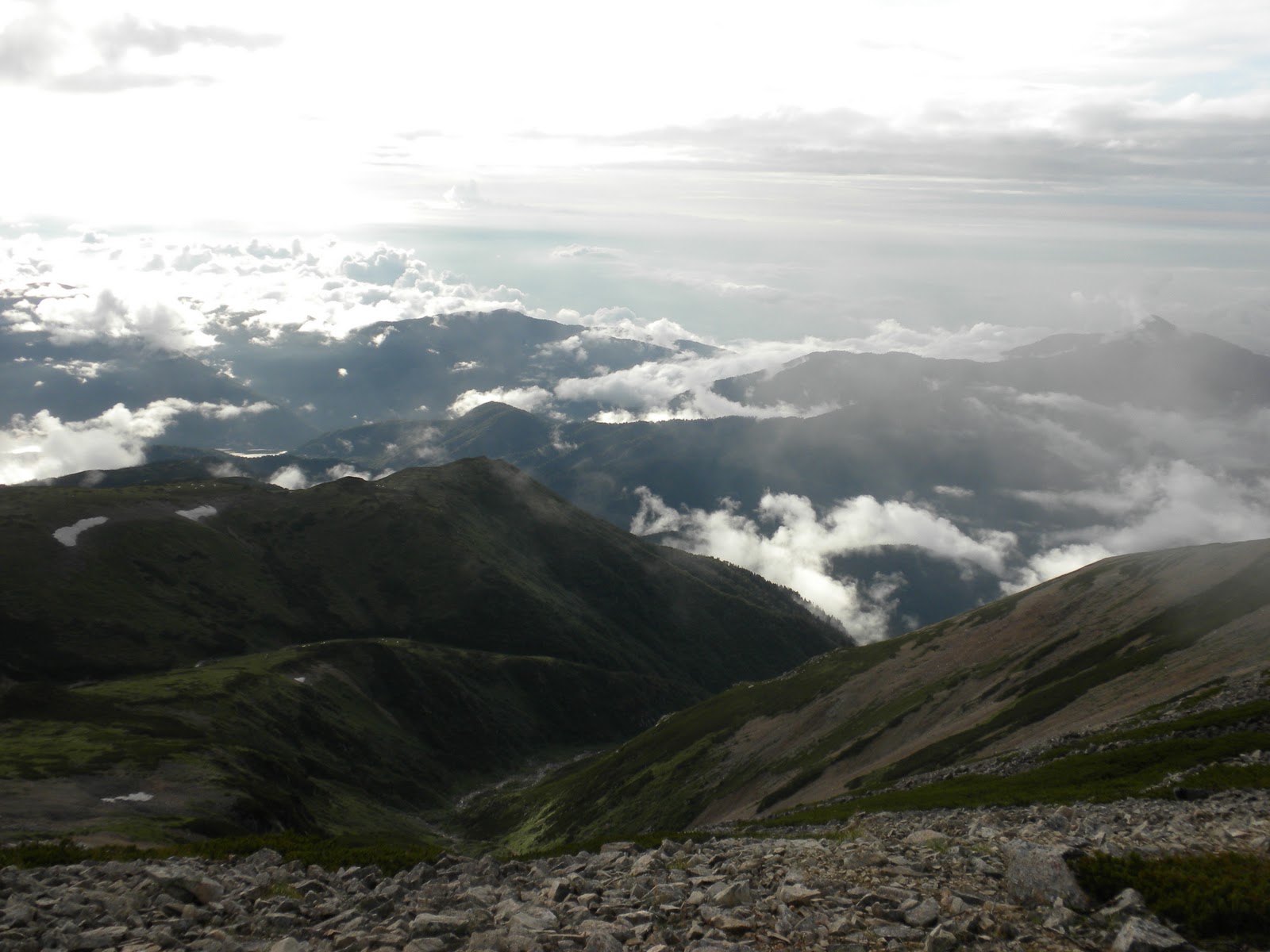
The mountains are my body,
the clouds are my thoughts.


 How's that for wisdom? When I took these pictures it was a real "Whooaaaaa ... duuuuddde." moment for me.


 I've been foibled by the blogging gods over and over again trying to put a first entry in over the past couple days, and so now you're getting a very very condensed version of what I imagined. Screw it, look at these interesting pictures I took on a week-long hiking trip from Tateyama in Toyama Prefecture to Kamikochi in Nagano, drink your preffered blog-reading-beverage, and read some ramblings about my recent transitions and thoughts on martial arts.


 First off, I have left my old job working as an assistant language teacher with the JET Program at Sakurai High School in mid-smalltown Kurobe to be a children's eikaiwa (English conversation school) teacher for Peppy's Kids Club in small city Toyama City. This means I moved from the rice paddies to the grey concrete blur to work for less pay and reduced vacations for a job that's 100x more challenging ... oh yeah, and I work nights so I get to go to aikido once a week maybe instead of three to four. But things couldn't be better!!! They also couldn't be worse. That's just the nature of existence, there is only the now, right?


But seriously, everything is just mountains and clouds.


 And here's my friend.


And his friend. They were cool and liked to drink beer. They saved me from realizing my week of "purity" and bought me a very expensive tallboy Asahi from one of the mountain huts.


 Anyway, everything is different now.

The old thoughts aren't interesting anymore, the don't make sense anymore, the images, the smells, my clothes even, it's all dead history.

The beautiful thing about the New, is that you can't really expect what it will be, and if it really is new, it will be accompanied by new feelings. This is really how you know something is new. It's that easy! You just do it! Right?

Well, not ... really. Our mind, the tool that it can be, categorizes and starts inserting all kinds of opinions on the matter ... which becomes more your habits and tendencies than that new experience itself. For example, your at a festival seeing something you've never seen before and it's great with all these new feelings, but then you start to think ... which is stupid ... "Oh, I know how to make this better" or "I know what this is" or you say some stupid joke that is half-relevant you heard but your friends probably haven't. If this occurs long enough without being checked, then you'll just have a long history of you masturbating all over these passed up new chances. And that's not all that cool.

There's got to be a better way.


Most likely, between the abstract polarities, you find yourself in your specific situation, which is amazing and completely independent and new in and of itself. So, let's get specific here. Concerning this blog, and myself, I will be writing about being an American living in Japan, because that's what I am, Zen and Taoism and mythology because that's what I'm interested in, teaching foreign language, because that's what I spend a lot of my time doing, and then of course, like a giant masterpiece standing in the center of my grand cathedral, exists ... martial arts ...


What an extremely difficult thing to describe.


 A lot of my time is spent on this topic of "martial arts", and I think that goes for a lot of readers here too. It is a beautiful kaleidescopic mandala we form together at "martial artists", with all different kinds of styles and beliefs and directions and histories ... including all our brothers and sisters in the past who punched the air and moved around through imaginary opponents and liked it. One of the particularly interesting things about the "martial arts" that I like to think about is the timelessness of it all. Someone centuries ago may have been doing these same movements and thinking these same things. In a way, we can excuse ourselves from the modern world by engaging in such activity, which is cool! But we do exist now, and are an integral part of the modern world of October 2011. In this respect, we have some very interesting trends in the "martial arts." (I hope the quotations aren't bugging  you, because I must persist until the end of this entry).


We have UFC cage fighting featuring mixed "martial artists", and people practicing "martial arts" who have never encountered violence in their life. The great disparity between "martial artists" leads us to one very big question:


 "What are the Martial Arts!"


And then we have the emergenceof the blogosphere, an electronic voice translated through 0's and 1's given to all with access to a computer with an internet connection.

So let's get talking!

Well, actually that might be enough for now. We certainly don't need to solve the Problem right here an now. Rather, let's discuss over months or years of snipits of discussion. We're so very far from the end anyway.

If I could make one last comment though ...

Recently, there has been great debate over what constitutes a "martial artist." A lot of the people I tend to side with, but don't totally agree with, accuse some of not embracing the "artist" side of the equation. For example, UFC fighters are only just that, and can not be considered "martial artists". But lately I've been looking at the other side of the phrase. I'm comfortable calling myself and artist in my practice ... but martial? Am I martial? Are you?


It's all just mountains and clouds ... and flowers.

I happily look forward to more conversations with you all. Thank you for reading.

Saturday, February 27, 2010

Shogyoumujou

"The Sound of bells echoes through the monastery at Gion Shoja, telling all who hear it that nothing is permanent."
"Gion Shouja no kane no koe, shogyoumujou no hibiki ari."
A haunting passage isn't it? It the most famous line from one of the classics of Japanese literature, "The Tale of the Heike." Shogyoumujou is the "nothing is permanent/everything in life is transient" part of the passage. I'm not going to try to explain Zen philosophy here, but I just wanted to share this with you as it has affected me greatly since I first read it.
No matter your pains, addictions, sufferings ... or your pleasures, glories, or successes for that matter, they will not endure eternity.