Showing posts with label martial arts training in Japan. Show all posts
Showing posts with label martial arts training in Japan. Show all posts
Thursday, January 16, 2014

Sunday, December 8, 2013
I Finally Found Iaido ... and Jodo

I've mentioned in the past few posts my growing interest in a dojo that teaches iaido and jodo in Nakatsu. Until now I've been just trying to get used to the new home with the area and work. After a few weeks I started kyudo here and found an excellent dojo, but I've had trouble getting started, and still haven't found a rythm. I thought I'd wait at least until I get into the rythm of kyudo, maybe a few months or so, before trying anything new. But I have too much time and energy on my hands to just sit around and plan. That frustration, plus the intrigue of finally exploring new budo boiled over and I couldn't help but contact the dojo and make introductions.
Two days ago I decided to make the call despite all warnings against. I woke up, went through my morning routine, and then decided to call. But something felt wrong. Was I really going to put this whole thing in motion? The thing is, if I make the call and initiate contact, then I'm going to have to show up. I'm going to have to present myself and my situation and take that teacher's time and energy to feel me out and accomodate me as a prospective student. After that I will be asked if I want to start. If I just talk about the limitations of practice (acquiring a new practice while still maintaining kyudo, only having weekday mornings to train) and give vague answers ("Well, I want to start, but I dunno ...) then I'll be considered a flake (because it is flaky) and any future potential contact will be limited by that first impression.
First impressions are so important, maybe a little more so in Japan. If you start off on the right foot, you can fall as much as you want as long as you try to get back up ... and finishing is really important in Japan, too. As a matter of fact, compared to my feelings about home, how you start and finish things is way more important here. As for the actual mid-way participation, it doesn't have to be perfect, not by a long shot. (The reasons why will demand another post!)

Don't be annoying. If there's any advice my small years can offer another person when meeting a new person in which you'll receive a great service ... like a job or a new dojo ... don't be annoying.
OK, don't be annoying.
So I called at the awkward time of 2 p.m. What normal person calls someone else at this time of day? Regardless, it's what I did. It rang and rang and eventually went to voice mail.
SHIT! I didn't think of what to do if it went to voicemail.
Of course before the call I went through my head what I would say, but setting anything in stone is just setting yourself up for failure (no matter what language), plus all the thinking taxes my resolve, so I just said screw it and call and see what happens.
But it went to voicemail, and I didn't expect that, and so I hung up before leaving a message.
Shit. This guy probably won't call back this random number after one call (though Japanese seem to be better at calling people back, I think). So, I'm going to have to call again, and I'm going to have to leave a message.
OK.
So I rehearsed a couple times what I was going to say and was ready.
I called. It went to voicemail. I began to speak:
"Hello. I'm calling for Yamada Sensei. My name is Zac and I'm an American who just moved to Nakatsu. I found your website and am interested in learning more about what you do. I've always had an interest in budo and ~"
BEEEEEEEEEEEP!

OK, I'll call one more time and see.
I called, it rang, someone picked up, but I couldn't hear anything. Maybe he was busy and couldn't deal with the constant ringing. Maybe the button was pressed without his knowing? I have no idea. But I hung up after 10 seconds of silence and left it at that. Though this teacher got three phone calls and one half-message from a gaijin which he may or may not have understood, if he's a good teacher or person at all, he'll understand he should call me back. If not, I'll call again tomorrow.
After that, I called it enough and left for work. The whole time riding my bike and the train, and a bike again, I thought about what ripples will happen from my initial tossing of the stone. Did I understand what I had started? How far would this go? I thought of many different things. I thought of finding the perfect dojo and experience I've been waiting for my whole life. I thought that the sensei would be crap, or their training time wouldn't work with my schedule and it would end before I ever unsheathed a proper katana.

I jumped on my bike and raced to the station, heart pounding and mind racing with excitement.


So yeah, the next day I did my thing and thought the whole time of that Saturday morning meeting to come.
The night I had a beer and quite a few glasses of wine. But totally within my limits, and went to sleep knowing I would just wake up, take a shower, eat, and then this quest for further budo would be happening to me.
I woke up and took longer than I thought in preparation squeezing my time short. I stopped at a convenience store for a coffee and gulped it down while I raced on my bike over bumpy sidewalks to the dojo. From my apartment it's about thirty minutes on the bike. Is that long? Certainly not the epitome of convenience, but I swore before if I didn't have to ride a train and make a commute of over an hour one way to budo training like I did for kyudo in Toyama, I wouldn't complain. And so I won't.
Along with first impressions, being on time, or early is sooooooooooo important in Japan. No matter who or what you are, just don't be late. I had to throw my coffee cup away and take a piss before going in the dojo (I knew I would have to wait a long time before next chances of relief) so I stopped in the shopping center across the street, literally ran to the bathroom, finished, jumped on the bike and screeched to a halt in front of the dojo at 9:57.
YES!
Perfect. Truly perfect, I think.
I climbed the four steps of the dojo, stopped and stepped back down for a 30 second breather. I saw a shape come to the door, open, and then it began.

The dojo is ... NICE.
I saw pictures of the outside online and it looked like a nondescript square white building: Super not-interesting. On the outside are wooden signs with the name of the dojo, but if you didn't know what you were looking at, you definitely wouldn't notice it. When I got to the dojo for myself I though about how unimpressive it is, which is often a good sign of a dojo. But ... I was impressed in a very subconscious way when I went in. It smelled of fresh hinoki wood, was not a huge hall, but certainly not cramped for space. It was clean, there were martial arts paraphernalia on the walls, and there were big mirrors. The sensei was very nice and welcoming and we began talking. We had a minute of chit chat, and then he began showing me some of the scrolls on the wall which told of the arts that were practiced in the dojo. Not but two minutes later, another man came in the dojo and began getting dressed.
He asked why I came and I said that I was interested, really interested, in the iaido and jodo it looks like they practiced. He smiled wide and then asked if I had any experience in martial arts. I said I did. He asked if it was karate, or something, and I said that in high school I started karate. He seemed to expect this. After I graduated from college I came to Japan and started aikido. He seemed interested in that. I said I did kyudo as well, and he didn't seem interested at all. I didn't mention my time in other Chinese arts like Tai Chi, Ba Gua, and Hsing I, mostly because it would inundate everything else, and anyone who has done so many different things is probably not good at anything. I remember when I first talked to my aikido sensei, who was a little less friendly at first meeting than this guy, I mentioned I did karate and tai chi chuan. He asked what kind of karate and I said Hawaiian Kenpo. He had never heard of it before and didn't seem to care, and didn't say anything else at all about tai chi. Since then, I probably won't mention at first meetings I practice tai chi chuan, not for any other reason than it doesn't seem to resonate with the Japanese audience all that much. (But if brought up I would happily talk for hours attesting to its legitimacy and the fact that if all else faded away, I would still be standing there practicing the tai chi form, and idealizing about push hands as the best martial arts practice I've ever felt). So he didn't seem very impressed with kyudo, and that is another thing I've noticed among other budoka. I'm excited to get back to other budo and see kyudo from a distance, but any misjudgements of kyudo are just that, misjudgements. It is a legitimate budo and should be admired with the rest, training the mind body and soul sufficiently (but further explanation will require a whole separate post as well! Too much to say, too much.)
So, we talked about these kinds of things and he told me about the dojo and after five minutes he told me to take a seat and relax and watch the training session.

I was impressed with everything I had seen so far, and was happy that I was able to sit in on a training. Before, I really wasn't sure what this meeting was going to be like. Would we just talk for a few minutes? Would he expect me to start training right then? Would I watch a training session first? I was happy for the latter, which is what I expected anyway.
I sat in a chair in a corner and watched.
They started with jodo. By "they" I mean Yamamoto Sensei and the lone student.
Yamamoto Sensei is an interesting looking guy. Many of my Japanese teachers and friends in the martial arts have been far more normal than I imagined, which is perfectly fine, but there's something about this guy that stands out a bit more. He's pretty tall for a Japanese, maybe six foot, which makes him considerably taller than me, and any other Japanese martial arts teacher I've had before. My aikido sensei was maybe 5'9, kyudo sensei in Toyama about 5'7, and kyudo sensei in Nakatsu about 5'5, and all fairly average looking Japanese dudes. So this Yamamoto Sensei is pretty tall, and old enough to have half of his full head of hair greying. The thing I noticed most though was his beard. He has a beard, and it's cool. You can tell he takes his time trimming and shaving around it, and in fact his demeaner shows that he isn't lazy about his physical hygiene. I know think this is a good thing. He's in good shape, not super thin, but also not especially muscled. His limbs seem a bit long, but I suppose that's normal for people of his height. His hands are pretty average sized. He has very attentive eyes, but he doesn't stare at you or anything. His gaze simply looks sharp. He moves within his bounds and balance, but he looks like he can move fast when he needs to, which is something I haven't seen much of in my other Japanese teachers. Fast movements don't happen often in kyudo or aikido, though I have seen my aikido sensei move fast when practicing his kenpo.
The student looked like a good student, but definitely a beginner. At one point we chatted for a moment and he said he'd only been practicing for a month now. So short. It made sense. In the movements he found himself in strangely off balance positions, and struggled to remember all of the little details involved in sitting, standing, preparing movements, etc (as anyone would and I will!).
I was totally impressed by the one on one class they were having. I haven't had that in a long time. To have your teacher's full attention in improving your technique is a very special experience. In kyudo I was lucky to get my sensei's full attention often, but even then it's not like the whole time he's there with you. He'll watch you, help you, stay for 2 to 15 minutes, and then shoot or help someone else and come back later. In aikido this never happened because there were always a lot of other people, though I had lots of one on one conversations with the sensei. Furthermore, a lot of things in aikido deal with very subtle body movements where the sensei will tell you to do something that really feels impossible. My impression with this kind of iaido and jodo is that a lot of it starts off with and can ride along with imitation. Imitate your teacher, do exactly what movements he says, and you're good. This is much more difficult to do immediately in aikido and kyudo.
So they worked on jodo, and I watched from the corner. I've had experience with the jo in aikido, but I knew that it would be different than non-aikido jodo. The jodo I've done was good, but extremely limited ( not because of the teacher, but because of my rank and time). Most of the jodo I've done is solo waza, with very little experience doing waza with opposing partners, and always relative to aikido movements. I think it's good, but different than this jodo, perhaps. There were lots of similarities, but that had less to do with my knowledge of the jo and more about general rules about budo like body weight, hand positioning, and distance.
Yamamoto Sensei talks a lot. For him, it's a good thing. He explains everything he does and why in a very practical manner. He also gives stories or further examples to explain his points. He talks a lot, but for him it works. He also moves a lot, and by that I mean practices each movement a lot to show and work with the student. You can tell he has a goal, which is the student performing the full movement correctly with a partner. He does whatever it takes to get that student to that point the fastest and most thoroughly. He'll start with introduction movements, explanations, speeding up of the movement and timing. When there is a problem, he'll go back and fill in the gaps until the student understands. He watched the student very carefully, focusing on the necessary missing pieces, and not bothering with other small things that will come with time.

The jo is used in context against the ken (sword). In this respect, you have to analyze the pros and cons of this particular weapon. Pros, it has twice as many options as you can use either end interchangeably. It also has reach. However, it's just a stick compared to a long blade, which in my opinion seems like the greatest disadvantage. Because of this, one must be persistent in examining their practice of the jo. Every advantage must be taken to it's maximum. I saw this in practice as Yamamoto Sensei told the student to hold the jo or his body in a certain way as not to waste the length of the jo, and also to move in ways as to not give an opportunity for the opponent's blade to slash you or your jo, which would be the end of everything.
After an hour they moved on to iaido.

During this interum I looked around the dojo from my perch on a stool.
The dojo is NICE!
Fairly simple, but it looks very recently built. I asked later and he said it's been about a year. He seemed surprised at my interest in this detail. It smells like fresh hinoki wood and has beautiful mirrors, as I said before. The ceiling is high, and there are racks with lots of weapons (something I haven't seen since my first karate dojo). It's not a giant hall or anything, but very comfortably sized. Looking around, this is the perfect dojo, I thought.
They began iaido and the practice was similar to that with the jo. Just the two of them, and the teacher read and reacted to his student very well. There were lots of key explanations, and Yamamoto Sensei commented that though it looks like we practice iaido alone, it's impossible to do alone or think of as a solitary person's art. This hit home with my kyudo which is just the same. In jodo there was more of just starting, but in iaido a lot of time was spent on the proper introductory movements and etiquette. I also empathized with this from my experience in kyudo. The student was having trouble with it, and I just wanted to start doing it myself. I looked down and saw my hands realizing moving, mimicking the movements Sensei was teaching. I wanted to start there so bad, but today I would just watch.

When they finished, the student looked happy to call it a day, and the sensei laughed. This is a guy who loves his arts, has practiced diligently for a long time, and has a mind for an encyclopedia.
For some reason, in some way, I've been looking for this kind of training and teacher for a really long time. He asked me how it was and I said it was really interesting. He asked if I wanted to try and I said I really wanted to.
So we began discussions of the logistics. In this, my biggest worries were relieved. He teaches in the mornings according to the student's time. My work time will be no problem. Furthermore, I was really worried about him wanting students to spend a lot of days in training, but when I asked how often most students train in the beginning, he said just one day a week.

I was really hoping that he was going to say you don't have to come all the time, but one day? Wow. I guess ... that's ideal to start. I'll start with the one day a week and move on from there. In all of my martial arts experience it starts like this. You show up for the limited time at first, get used to each other, and things grow from there, and I can see there certainly is room for there to happen.
I was sure to assert my dedication to kyudo, but of course asked what he thought about practicing the two. I think the best situation for him is to have a student solely devoted to his dojo, and when that attention is diverted, it's a red flag in any situation. He tentatively said it would be no problem, but that it can get difficult to handle the details of it all when your mind is divided. I know this all too well, but I think it can work out for now, which is most important. I'm held back by my hand in kyudo, and I think my practice is hampered by my sole focus on it. I think for the most part I need to just chill the f&%k out on kyudo, go a few times a week and not worry about it instead of bouncing between the heavens and hells of it's affects. One day a week? This is ideal in a lot of ways. I'll start with this and see. I told him, and believe, that if it's too much I'll have to scrap one.
That's kind of scary. Because looking at this dojo, letting go of the interest and curiousity in it is impossible. In the beginning it will be one day a week, but I can tell this dojo is really into it's arts and will take it as far as one wants. I love kyudo, and I've come to an excellent dojo, after such a great experience with my past teacher in Toyama, I can't just throw it away ... but to only do kyudo now is torture and a waste I think. I'll progress in both slowly and see how it goes.
So it's good to go.

There was just one issue I hadn't predicted: money. I have a jo and dougi to use which is great. They use hakama when they train, and I have one from kyudo, but I have a feeling it's a bit different from the ones they use here. Other than that, the sword is left. The sword which is super necessary and not cheap. I asked how much it was and he said about $400 straight faced. They talked and said they've seen some for a little less than $300, but he definitely didn't try to pretend it would be any cheaper, and I appreciate that I guess. So after the move and all the unexpected expenses, here's one more. To the woe of everyone else concerned about my funds, that sword will be bought as soon as possible, before I really do have no money.
Unfortunately, my jo is still in Toyama, and I'll go and pick it up, along with my wife! in two weeks when I go back to Toyama for a few days. He said that's good, and until that time when I have all the gear we can just chill. I'll go in next Friday to sign paperwork, and train "just a little". He said this with a smile which gave me confidence. Though there is paperwork and gear to be had, he is a teacher and I am a student and we're ready to get started. I also liked that he said we'll start slowly at whatever pace works best and move from there.

After that I rode to the mountain onsen of my desire. I thought. I soaked. I forgot. I thought.
I hate the supermarket, but I loved it today.
Everything about this place has blossomed. At points I've doubted my time, but today it feels right.
Today it feels like there are no such things as mistakes,
because there isn't.
We just move, and go, and things react, and so do we, and we have a thought, perhaps a desire, and it becomes real ...
This is the Becoming, and I'm very excited.

(These photos are of the bike ride after the dojo meeting to Nishitani Onsen. On the way I passed Yabakei, which is the most famous natural attraction in Nakatsu City, cliffs in which the side is carved out by temples. Not a bad place at all.)
Wednesday, December 4, 2013
I Can Be Perfect When I Die

(Art found at http://www.hdwallpapers.in/eclipse_warrior-wallpapers.html)
I don't trust anything that I can't fully feel.
I'm now 28 and bursting with energy, begging for somebody to give me a goal I believe in to run at as fast as I can.
I've always felt this most with physical activities. In grade school it was sports, since then it's been martial arts. Through the arts I've spent time in, I'm now living in Nakatsu where I practice Kyudo. It's a wonderful art, but I can't expend the energy like I fully desire. On top of that, my hand keeps me from practicing full-on everyday. I know Kyudo is teaching me patience and intelligence, but it doesn't satiate my hunger. I think I need something to physically beat me down until I'm too tired to care.
And so my mind wanders ...
I've found another dojo that teaches two arts I've been foaming at the mouth to get a chance to practice: iaido and jodo (joudo - short staff). Here is there website if you want to check it out: http://www.kenwa-kai.com/index.html .
I've been idealizing about formally only practicing one art for the time being ... but now that I'm here, I feel that I want more. Perhaps it's just because my hand keeps me from practicing kyudo as much as I want, and when it heals one art will suffice, but I don't want to wait. I have all the materials sitting right in front of me and I want it so bad. Why would I hold back?
3 Reasons:
1.) Being able to focus on one art, which more specifically means physically focusing all of my available effort into one skill, letting myself subconsciously adjust to that one art in the downtime, and learning about the art through reading and writing.
2.) Allowing myself opportunities to fully participate in extra activities related the one dojo I practice at like weekend tests, competitions, or parties. This is a big one I never expected before I started. The core of the practice is the routine practice itself, but without being able to participate in all the extra stuff robs one of the most exciting and experience-altering facets of the art. Also, dojo fees start pulling you in two directions.
3.) One big one that I'm not to sure about is the feelings of the other teachers and practitioners. Japan really likes focusing on one thing at a time ... or actually more like your whole life. If I were to focus on only Kyudo, I would receive uninhibited attention and care. If it were to be known that I had a second budo lover, that attention might become limited. As for keeping it a secret, that would definitely not work. If I were to practice two arts and then have it figured out later that I was when everything thought I was only doing one, it would be awkward ... like finding out you were not the only one. In a lot of ways, Japanese are against this kind of divided love for a lot of deep reasons I don't think anyone really understands.
So there are lots of reasons to keep me limited to only one art for the present time, but there's also a lot to make me want to branch out again:
1.) I want to practice martial arts, and many different kinds until I'm gone from the world. I suppose taking one at a time is one way to do it in which I can focus on only one at a time, but that kind of putting-off of plans and desires doesn't seem realistic to me. Plus, I want to feel the mix of the different arts while growing in each at the same time, not just getting good at one and then forgetting ... though that's not so bad either.
2.) I don't trust one art. By only focusing on one you forget the others and isolate yourself away from the rest of the world. I don't trust that this one art will give me all that I need. I don't trust that I'm getting everything I want. One can say that we can experience everything in one simple act, and by progressing in Kyudo I can experience everything I could in another art ... but I don't trust it, and that doubt gives me a strength I can feel.
3.) I'M WILD CURIOUS ABOUT IT. I've wanted to practice iaido and kenjutsu for so long but have never had the chance. Also, I heard jodo was famous in Kyushu and in coming here I thought I might get a chance. This curiousity and enthusiasm is one of the greatest ingredients to success in budo. When I've progressed the most is when I'm too interested and having too much fun to worry about anything that could hold me back.
Sitting here with a bum hand and extra time, my mind has already taking this idea and begun to form a new future. That is incredibly exciting. Perhaps I get too far ahead of myself, I do that often. But what a waste of such enthusiasm isn't it? I can be perfect when I die, for now, I want to experiment and explore.
The reality is I have come this far in kyudo and have found an excellent dojo and will continue no matter what, naming it my main for now. Also, my time will change considerably once the wife gets here next month. Furthermore, I've been wanting to spend more time writing, and if I adopt another budo, that might take away all of the time I've been wanting to give to the blog and other projects.
I suppose I'll think about it a bit more to see if I'm really interested and really can't wait, contact the dojo, and go from there. Until that time, I know nothing. The dojo could be a bunch of punks practicing a bunk art. They could only want students who will devote all of their time to it. Or maybe it's exactly what I want ...
It could be the greatest opportunity ever just waiting for me to contact. Maybe it would be perfectly fine to practice 2 or 3 mornings a week, taking it slow, allowing me to live me life in all it's faculties while still being able to do all else that I want.
Why wouldn't it be?
Because I need to sacrifice everything for one thing?
Bullshit.
Because it's being to greedy on my part?
Bullshit.
Because I expect the world to be given to me just how I want?
Bullshit.
All there is is a feeling: I want. From that my mind and body begins to move: achieve. If I mis-step I'll know it and readjust. We become humble on the path of budo, but you don't get anywhere unless you're ready to step.
Any thoughts?
Monday, July 8, 2013
Living Within One's Means

(Totally unrelated very cool pic found at http://apbworks.co.nz/bp_more.htm)
The two sides could be described as form and chaos. We unconsciously engage the chaos with instinct and use the faculties of our mind to adhere to form. Complete indulgence in one side while neglecting the other is to suffer imbalance. So how much effort or non-effort do we put into each side? This is perhaps the great impossible quest of the budo-ka.
When I imagine the warrior life, I don't think of a lot of things I actually need in order to live the life I lead. For example, my idea of a warrior's day off is far from what I've done so far today. I went to the bank to withdrawal money from my precious savings. I went to pay my yearly resident tax for living here in Japan. I went to solve a problem with my pension, the result of which is paying more money every month. Both of these required going to the City Hall twice and a separate tax office. I also went to the train station to buy tickets for a trip to the airport for my trip home this summer. I went to the grocery store. On the way I spent a lot of time waiting at traffic lights. I still need to fix a light in my bathroom. I need to clean my apartment. I will go to aikido practice tonight, but that will also require lots of train-riding and waiting.
Where is honing of sword skills? Where is the beast? When do I get to be the hero of my story that everyone admires? When do I get to feel good about making progress on the warrior path? All of that momentum of spirit dissipates with each menial arrand I engage.
All of these necessities are a part of form. They are necessary to live the life I lead here and now, but I need to make them as small as possible, though in fact they feel very big. I do this largely by reducing worry. I think about how to go about dealing with these errands, execute that plan, and don't spend excess thought or worry on the subject. This requires a lot of patience and gaman, a wonderful Japanese word that means "to put up with". It also requires the ability to accept fate, especially when it deals you worse cards than you expected.
After going through all of this I don't worry, but do need to think about how I can spend my funds in a way to deal with the newfound taxes, live a happy life, and still be able to put money away monthly into savings.
Think, plan, execute.
Don't worry, because everything is OK.
If finding balance between the impossible opposites is the quest of the warrior, the realization that everything is OK is their sword.
With that sword we protect what deserves life, and slice through that which does not.
The only one who can weild that weapon is oneself. To live within one's means is to be strong and independent, and to be wise is to realize that we need others. Everyday I move in the world as form in chaos, or perhaps chaos through form. These words are the tale of a budo-ka learning the world, not a text with answers. I sit in awe of it all, and shake my head at all the faltering effort, but it's what must be done.
I don't know. I move.
Tuesday, June 4, 2013
Budo Changes You
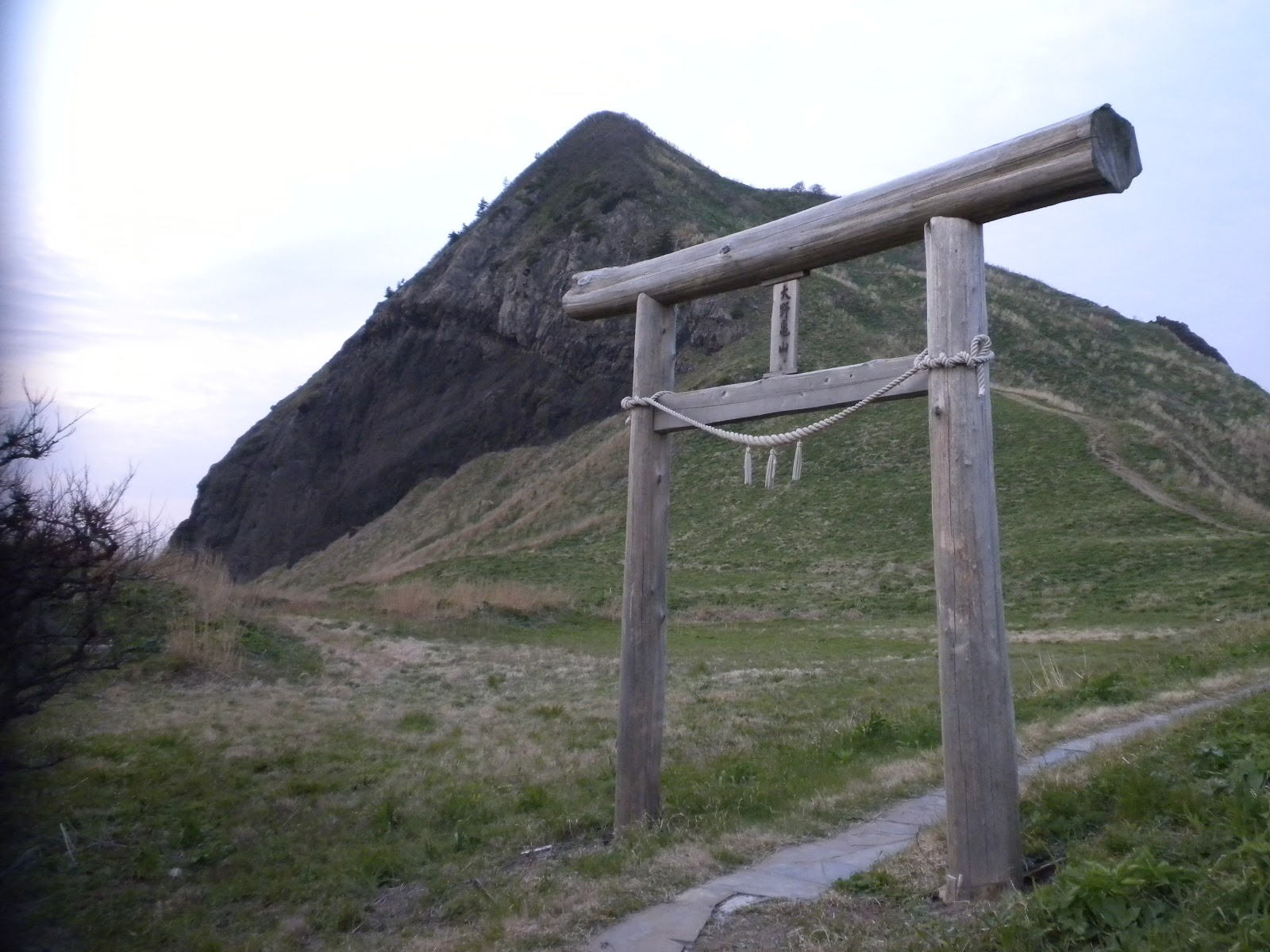


And some acceptance.

This pair of circumstances is very important in budo. Seeing this pair is very important in my life. Sitting on an elevated rock at the edge of the ocean, budo is a very important part of me, and a part I think will survive the atomic blast.

But not really you.
Rather, it changes the way you interact with the world. Budo is a system that becomes a mode of communication between you and the outside world.
Budo is a system to be utilized. Budo is a system that will teach you to process and handle things in a way pre-determined to be effective.
First, it does so by affecting how you unconsciously make decisions in the world. The purpose of technique is that you practice physical responses to the point at which you don't think. In self-defense, this means moving your body in a way to avoid attacks and execute your own. In kyudo, this means having your body go through the myriad physical checks necessary in order to focus on the shooting. We retrain our natural physical reactions by practicing budo.
Secondly, budo changes how you consciously deal with stimula. This is most clearly seen in encountering adversity. In budo, obstacles are overcome by eliminating all extraneous stimulation in order to focus on the matter at hand. Emotions are not the sole base of decision making, and attempts are made to try to figure out what lies beneath or beyond them. Natural reactions are studied, "Why do I feel this way?". Decisions are made to the best of ability and are followed through with resolution. Success and failure are less about the results and more about one's own effort.

Budo is a system, which changes how we deal with the world. Yet, it is advanced compared to many other systems in that it provides itself with a skapegoat to survive definition. Budo is a way of doing things, but it is also a way of not doing things. Budo exists, and yet the fact that it exists means it also doesn't exist. Budo should be employed, until it shouldn't be employed. Budo is, and is not. This is what makes it a living entity. This adds to its continual misunderstanding.
Our actions are the only things that belong to us. Budo is not one's identity, but a way in which one's identity can interact with the world. It is also it's own entity. That being said, our identities are not even our's to own. We are born into the world without a choice, given circumstances without a choice. But if there is anything we can control, it is our actions. This is where our reality meets with a system, and our lives are altered. So Budo is the closest thing we have to affecting control in our lives, while also realizing the chaotic lack of control we have. It must be both. If not, it is not Budo.

But it also sharpens me to an edge, made as fine as possible to slice through all of existence. I don't understand this. I would say it's like war or violence, but I can't make a connection with them easily.
When the budo takes a hold of me, I am completely submerged in it's grasp, enthusiastically following it's tenets. I become an incredibly productive and safe individual. I am so much so that the longer I practice, the deeper I find myself in it's periodic delusion. Only when I step back do I realize how blindly I ran into the dark. I'm somehow ashamed of that when I realize it. That sharpened edge, the violence of my will, it's the purpose of the system, but that system is smaller than the whole living organism. I am larger than the system. Budo is a foolish tool I worship. Budo is not the master of me, but backwards. But budo falls through my grasp, because it isn't mine, and actually isn't anything at all.
People naturally use their surroundings to support and enact their will. People manipulate their pasts, their memories, so support beliefs of their own, which is false. The past does not belong to us, just as nature. Just as this living system, Budo.

Well, I didn't talk about anything I planned to when I began this entry, so the conversation will surely continue! Just not here and now. Thank you for reading.
Saturday, March 23, 2013
My Martial Art: The Amalgamation
This is something I've been working on for a very long time.
It's been something like ... forever.
I'm serious! What is "my martial art", is something I've been practicing as long as I've been formally practicing martial arts. It's been something I've been working on as long as I've been using my body and mind. It existed in the seed of my body and mind from my mother and my father since before I was born; that seed which can be traced back all through my ancestors ... Irishmen, mainlanders, cavemen, monkeys, fish, single celled organisms, stardust, and beyond!
If my budo is something I've been working on infinitely into the past, then I've also been working on it in the future. The entirety of existence has been the "when" and "where" of my honing of my martial art. Not before, or after, but the actual, it of budo.
Congratulations! I've made it, and I've always been here!
Enough of the very serious jokes. I do have a more concrete point I want to address here in this post, and it has to do with being a person who has formally practiced different martial arts over a period of 10 years. I really don't like using time as measured by years when talking about martial arts. It always turns into a game of comparing numbers. It is a silly game that doesn't necessarily lead to clarification. Actually, in the absence of a holistic explanation of the situation, numbers of years just make things more confusing. But, I will put my ten years here because ... it is a time within which I have been able to go through many phases of training. Years earlier, I wouldn't be so good at ignoring glaring details and I wouldn't be able to see the commonalities. It's given me time to see other martial arts that have broadened my experience. This is one of the first times I've been able to see such a thick and fuzzy singular current through it all. Ask me again in ten years, and I'm sure I'll be able to tell you infinitely more.
As for the different martial arts I've practiced and how they contribute to my martial art, I think the clearest way to discuss the specifics is through a list of each martial art experienced in chronological order. I haven't put equal time into each martial art, and I haven't even included all I consider "having practiced." To name two, boxing and hsing i have helped me out a lot, but they just don't quite compare to the others in the list. There are many overlapping points between the arts, but I will try and mention each specific point in the category of the martial art which reveals its quality most clearest to me.
Hawaiian Kenpo:
-Use what works.
-Use what is most convenient.
-Use what is fastest to accomplishing your goal.
-Using your environment to your advantage.
-Not fighting as an option to solving issues.
-Doing anything possible to win.
-Being in physically good shape.
Tai Chi Chuan:
-Whole body utilization for individual techniques.
-Rooting.
-Blending with a partner.
-Using a partner's strength to your advantage.
-Learning from oneself.
Ba Gua Zhang:
-Limberness of body and control of movement (balance, etc).
-Practicing various forms to learn one thing.
Aikido:
-Positioning.
-No "fighting stance".
-Timing.
-Only expending necessary energy.
-Controlling an opponent/setting them off-balance.
-Relaxing throughout movement.
-Finding positions to be strong in, and others to give way.
-The need for good training partners.
Kyudo:
-Seeing everything.
-Maximum effort/focus towards a specific goal.
-Everything is "the point".
-Prioritizing attention to various matters in a movement.
-Appropriate patience.
-The need for a good teacher.
The listing above is meant to dissect my martial art with specifics concerning experiences in activities that are generally called "martial arts." But, all of the specifics I mentioned above are existent in all of the martial arts listed above. I utilize them all, all the time, but each practice allows me to notice them a little better. I don't need to practice these martial arts to have these abilities, I don't have to be aware of the abilities for them to exist. However, being aware of them, and practicing these different arts allows me to improve my technique. Why is this important if I've already forever practiced infinitely into the future and already mastered them, thus being perfect the way I am as is right now? Because that infinity is the honing process of martial arts. That that completion of all goals in the future is another version of this eternally perfect/imperfect honing.
So we have me: the body. "My martial art": the skeleton. The different martial arts I have practiced: the organs. But there are still a couple ingredients missing to bring this beast live.
First, there are my veins and arteries: the things that I do to connect all that exists within me. These are the things that make the art real. Some of these things are:
Health
-Healthy diet.
-Sufficient rest.
Stretching
-Making my body limber so that it can perform at it's greatest potential.
Meditating
-Specifically, standing. This is to clean the mind of unnecessaries, shake up and settle my body at the same time, and strengthen my tendons. Actually, trying to list this process takes many many more posts. I believe this is arguably, the single most important part of my martial art.
Learning
-Getting new material and inspiration to supplement the regular training, be it reading, videos, or seminars. Martial food for the artistic mind.
Then comes the last piece. The blood. The breath. The movement of it all:
Practice.
Without this single aspect ... the "honing" process, which is the defining characteristic of existence, changes dramatically. It slackens. It becomes wasteful. It becomes weak and distracted. Practice is the sword to our warrior. The path and the intention. If there is something to do with our conscious effort in life, it is for a honing which is benefitted by practice.
...
But then again, my martial art is as ancient as anything else, and there is no such thing as practice.
...
So there you have it, my martial art. I look forward to taking a look again at this later to further see it's defining characteristics. I wonder if there is anything I've forgotten. I wonder what kind of qualities that are usually regarded highly in other martial arts are not included in mine. What does your martial art look like? I urge you to investigate, because you do have one, and it's probably pretty cool.
Subscribe to:
Posts (Atom)