Monday, December 2, 2013

Kyushu Bike Explorations & the "Raiki-Shagi"


On this Sunday day-off I did what I haven't done in what feels like years, just ride the mountain bike into the unknown. Over the past couple years, bike rides have been dominated by great plans in search of high mountains leaving the apartment early in the morning. That is good, and usually where you find the really epic spots. But on this Sunday I took advantage of being in a completely new place and the jewels that are revealed in merely cruising around with no plan.


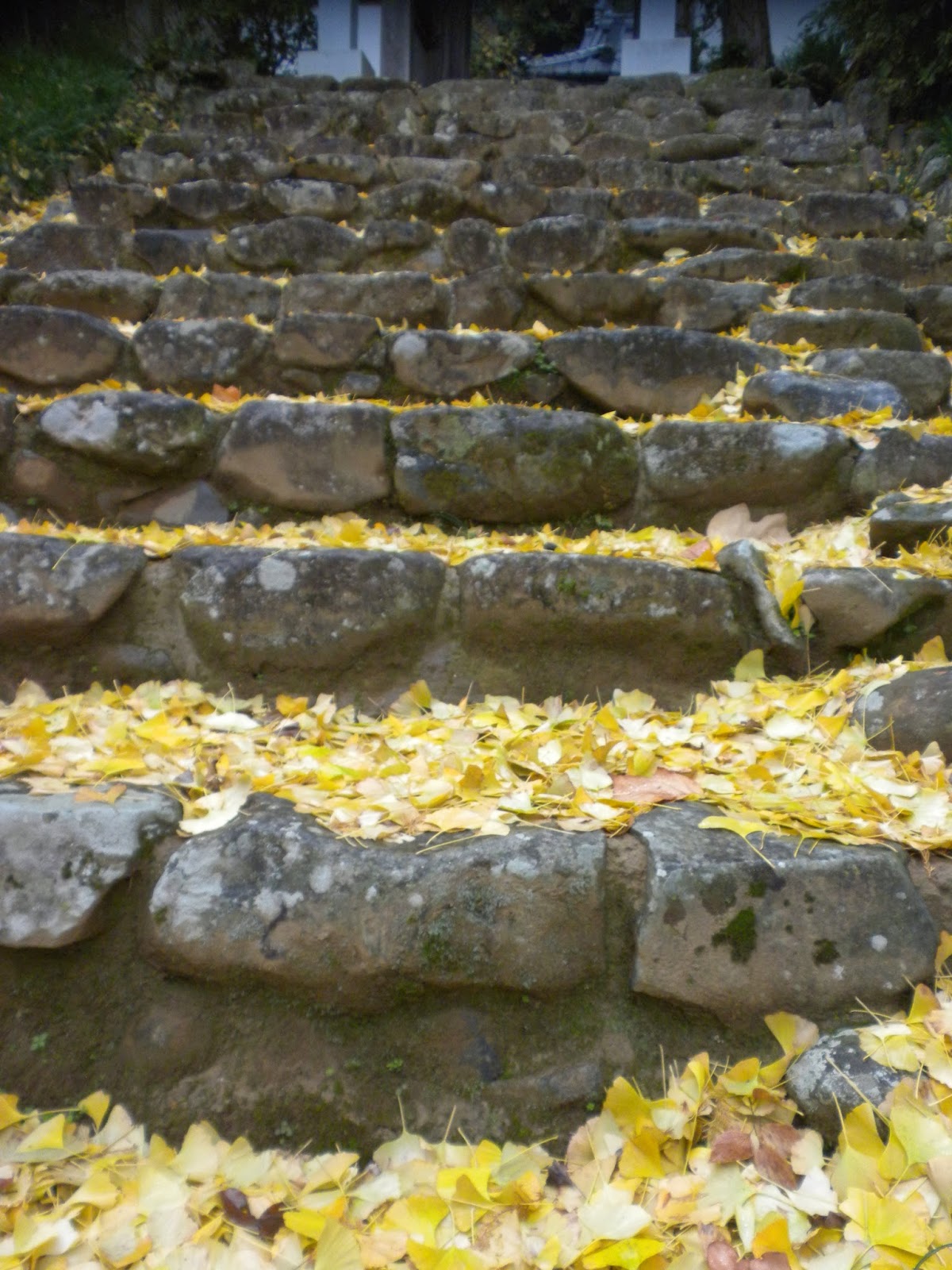
I rode west to the neighboring town of Buzen and then headed towards the hills where I thought I may find temples, hidden roads, and onsen. As you can tell by the pictures it was a dreary day. Partly rainy on this morning, the clouds hung low and it was cold enough to warrant a coat and hat with readied gloves and scarf in the bag. On this first of December, the shape of winter is almost completely upon us, with the last of the autumn colors hanging on before their eminent fall. These days are quiet. Many complain or stay indoors. However, this is where I thrive.


These days are quiet. When I ride, I feel isolated in the mist. The people are all indoors and the mountains are hidden behind thick veils of white and grey. Nothing but me and my thoughts, and those small treasures in the mud I normally wouldn't recognize. A big part of the move to Kyushu was about simplifying a lot of things in my life, and being able to marshal all of my concentration into the few things I decided to keep. That's the image, and it's a peaceful one for me: quiet, clean, focused. But the reality has felt a little more hectic, getting the new apartment together, getting adjusted to the new environment, trying to get in a routine with kyudo. Looking at it, I have all the right parts, but there's been a chaotic sky over it all. Why? Why does it still feel like the apocalypse? Why do I still feel failure and urgency grating beneath my skin?


Let's take a look at Kyudo.

I'm ready to focus all of my energy into this physical art, but have been plagued with blisters opening on my left hand. First I got a blister, the next day I tore it, took three days off and went back, wasn't enough time so it tore open again, I took a week off to make it heal, it was barely enough but I still kept doing the same things that make the blister in the first place and it tore open again. The good thing is, I finally talked to someone who told me why this was happening and what I need to do to make sure it doesn't happen again. I think I've got it and I'm dying to get back. I finally have a Monday off and want to go at night when most people practice, but the blister isn't completely healed and I'm afraid it will just tear open again if it's not 100%. I'm still not sure if I'm just going to go anyway tonight, or wait until it's 100%.

Point is, my experience in kyudo here hasn't been settled yet, and is usually just leaving me infuriated. With this time away from the dojo, I've been revisiting the "Kyuu-hon" official Kyudo Manual. It's main sections are posted in all kyudo dojos everywhere, in written tests they take questions from which all practical answers can be found in its contents, and it's the one thing all teachers will ask you if you have and tell you to read it over and over again. I received a copy from a friend last year and read through it fairly quickly.

The thing with kyudo books, is that they're not so easy to read cover to cover. One could divide most kyudo books into these sections:

-Introductions written by authors which can be often be subjective and superfluous.

-Descriptions of ettiquete and movements unrelated to shooting, which are just stone-dead boring and useless without physical instruction.

-Descriptions of technique which are good, but also worthless without physical experience or direct help from a teacher.

-Short sections of interviews or classic texts written by the masters, which are the gold gems of these books.

Wow, the descriptions of those first three sections were really negative. I guess that's the impression left with me from the few kyudo books I've read. On the good side, those subjective introductions can entice people to the art of kyudo, which is largely misunderstood. As to the technical descriptions, I suppose they should be referenced when one has a specific question. For example, if you can't remember exactly what angle or when to bow in a certain procedure, or how to properly pick up an arrow dropped mid-shooting, it can be a helpful reference. As for shooting technique, things can get very complicated and confusing after a long time of practice, and by returning the the texts you can be reminded of the essential basics involved.


Generally, I suppose a kyudo book should be bought and read cover to cover at first to get as much information as possible to help your practice, though it will probably require a large amount of discipline and intoxicating drinks. After that, they should be put away and picked up again for reference when stumped by a question.


But what I really want to talk about today, is the very first section of the "Kyuu-hon" (Kyudo Manual) and one of the main texts (sayings, documents, ?) the Raiki-Shagi, "Record of Etiquette-Truth of Shooting."

This is one of those super-important sections written by the masters that should be revisited from time to time to remind oneself of what may be at the core of the art as a whole. It's one of those texts that both beginners and masters can read and benefit from, though what each individual finds may be completely different from others.


So without further ado, the Raiki-Shagi:


"The shooting, with the round of moving forward or backward can never be without courtesy and propriety (Rei).

"After having acquired the right inner intention and correctness in the outward appearance, the bow and arrow can be handled resolutely.

"To shoot in this way is to perform the shooting with success, and through this shooting virtue will be evident.

"Kyudo is the way of perfect virtue. In the shooting, one must search for rightness in oneself. With the rightness of self, shooting can be realized.

"At the time when shooting fails, there should be no resentment towards those who win. On the contrary, this is an occasion to search for oneself."


What do you think?


When I first started Kyudo I was drawn to its spiritual emphasis. However, I had just been training in aikido with a teacher who was most concerned with technique: once you have technique you can start experimenting with the more abstract phenomenon of the art. With that, I was very concerned about quickly learning the physical basics of the art. Here and there I've enjoyed the more nebulous sides of Kyudo, but for the most part of been concerned with the physical technique.

In the move I had about a month off from Kyudo and have been reacquainting myself with the artistic expression of shooting the bow, and have been very excited to get back to the art and see how I can express myself better through the practice.

However, when I came back I started doing really weird things with my hands, and realize that I had forgotten how to do a lot of it. I'm revisiting old injuries and failures, ones that I supposedly overcame a long time ago. How is it that all of these old problems are coming back to haunt me? Why do I need to learn these things again?


When I first went back to kyudo I think it was alright, but after few days the techinique crumbled considerably, and the last day kind of went like this: I went in using the stronger bow I've been using lately, but my left hand won't let the bow rotate properly in the hand, which causes injury and bad technique. I start focusing entirely on this and forget the other hand or anything else I should be doing. I can't do what I need to do with my left hand, so I start making small "cheating" adjustments to fit to the form. In those small cheating adjustments, I change the technique making it weak. I can't do it perfectly on the makiwara (practice haybail), and go to the target anyway with a weaker bow. I try my best at first to breath, relax, and understand it won't be perfect, but I enter the malformed technique and have a horrible shot. I become angry with myself and kyudo, and start focusing only on the target. In that thought it's like if I just hit the target it will be OK, but I don't. I start rushing through the movements, which makes even worse technique. My body gets hurt by the mistakes in the technique. And I start to resent or envy the others around who are "succeeding" and not telling me what to do. I leave the dojo early and am propelled into the world with great confusion and frustration.


I believe there are two parts to this:

First is a matter of physics. I need to do what I need to do correctly in my left hand. If I can't do it I need to ask for help. Then, I can fix the technique and resume proper kyudo. Also, I need to not practice if I'm injured, because even if I do correct technique with an injured hand, it will continue to get worse.

Second is a matter of spirt. This is finally where the "Raiki-Shagi" comes into play.


I began with good intentions, but somewhere along the way dirt has gathered where I can't see, and demons have been breeding while my attention has been away. All of a sudden I've found myself obsessed with things outside of myself: success and stuff. I've been following bread-crumb trails left by society that have pulled me so far off center that Kyudo is no longer a practice of life, but a tool I use to assert my ego in the world. I use kyudo to dominate others and legitimize myself as a success in the universe. Perhaps that plays a part, but it is not the whole. It is the failure of technology in man, a tragedy because the intentions were good.

I don't know.

Knowledge is the gift of practice.

But before that practice, before the knowledge, we still exist. We exist, and must choose to live right in order the complete the world. Though I'm lacking, I still live, and must stand up straight and accept it all with the grace and composure of the Gods.

Shooting with perfect virtue for me is doing your very best while accepting your own mortality.


Going over all of these thoughts, the frustration returns and I want to quit and find another budo. But I know if I do I'm running away from this puzzle. There are small bits of sunshine hope through the clouds, and I know I must go on. I've wanted to quit so many times before, but in continuing I've reached new levels in this art of Kyudo. I know that if I continue I will succeed, but there is a fear that doesn't believe the equation and just wants it all to end.

If we continue something will happen.

If we quit, there is nothing.

I don't know.

Saturday, November 30, 2013

Am I a Fool?

(I know this art was on the last post, but it's way too cool to be over-rided by another post a mere hour later, and deserves more time: http://anisis.deviantart.com/art/Bloody-feast-196045969)

I'm not calling out, but merely speaking: Am I a complete fool for practicing a martial art that produces such a small amount of fun?

Seriously.

For a while kyudo has become the main budo of my time, and it is certainly the deepest I have ever found myself in experiences produced by the martial arts, in a good way.

But it's like, I go to aikido, or any other empty hand art and it's fun. Even if I haven't learned much, it still is. In kyudo, it is unbelievably fun when you realize you have learned something, because god damn you know it when you do, but you can lose it just as easily, and enter long periods of not knowing, and all else I leave the class cursing myself until next opportunities at the target.

Maybe I'm just in the transition and this kind of shit takes so long in Japan to get used to, new places and people and all, maybe I just need to roll it out some more,

but right now,

in this exact moment,

I feel like a fool and a waste, to be spending my time in it's art.

I'm ready to run, but I'm just getting beaten down.

Who knows what life is supposed to be like anyway.

I'll just figure it out.


Does Honest Budo Exist?


Yes.

But there's a lot of smoke and mirrors.

Cause that's the point.

With something that orginated as life and death: one person killing another ... the end point is most important ... or the only thing that is important.

But somehow a transition was made, and it doesn't matter whether you live or die, but how you live and die.

Certainly that has some clout ... but if you're dead, nothing really matters anymore, eh?

Dude all of this, martial art stuff, started off and survived as killing. Whoever put the name of art to it. I can consider it thus, but really? The art of killing someone and the art of ... whatever it is martial artists really do ... is really different.

I for one, am very concerned with how I live my life, so it's natural I've been attracted to budo. But then nothing in my life has ever depended on budo-learned life-or-death skills ... and in that respect, I am so completely unrelated to the origins of budo ... perhaps my use of "budo" is improper.

Maybe I have no idea what I'm doing.

One thing I do know, is that I practiced kyudo when I got to Nakatsu and got a blister on my hand and took a week off. I focused so badly on kyudo technique in that time in my head ... and when I came back to the bow I was weaker. Ever since my last in depth time with a teacher my kyudo has crumbled considerably.

This is my current life in budo ... the warrior.

Point being, my ideas in isolation have very little to do with actually getting something done, or being a warrior at all.

And yet a lot of beautiful art is created in isolation.

But anyway,

Is budo honest?

As budoka, we fail along the path, and that defines the whole, but when put it into words or something real, that loss is subjugated for the potential of the future.

Maybe failure is just left to reflective periods when we're old.

If I focus on the failure now, it takes up time to cultivate the new, so I don't.

But if I spend too much time in that optimistic climb, I forgot all the skulls I've climbed upon and it feels fake.

How could martial arts possibly survive in a world where profits are the only focus. No matter how high we stack data and expectations, the earth will condemn us with judgement, equal pain and success.

How could anything survive in our future world?

In kyudo I shoot an arrow at a target for the purpose of hitting it.

In society, an arrow is shot into the future for a goal.

In kyudo, if I miss, it's still all good.

In society, if an arrow is missed, it makes CNN news, which doesn't report anything correctly anyway.

Thank you for indulging in this rant, since it's the only thing I can post.

Still on the path of budo, and life, but the distinctions feel so much like limitations, and anything at all seems like just a little too much trouble.

(art presented by http://anisis.deviantart.com/art/Bloody-feast-196045969)

Saturday, November 23, 2013

Benefits of Fear

Fear sucks, but it's often said that it can help you improve.

How?

I'll give you a few reasons here stemming from one example: the string pre-releasing in Kyudo.

First you raise the bow in front and above yourself in uchiokoshi.

 
(Dude, I think I know this guy! I found it off a website from Oyabe which is in Toyama. I'm 99% sure I've seen this guy at tournaments. Pictures found at http://oyabekyudoukai.web.fc2.com/shaho.html)
 

Then you pull a third of the draw moving into daisan.

 
From there you perform the draw, hikiwake, and settle into the full draw, kai, in which you stretch yourself out in both directions for about 8 seconds.


It's usually in the drawing process (hikiwake or kai) that the string can slip out of your grip and slap you in the face. I went through a phase of chronic pre-slipping, and it still lingers everytime I pull in the guise of fear. When the string slips, it either completely ruins the technique or most likely slaps you in the face which really hurts, is a huge shock, and is incredibly embarrassing. This sucks. The prospect of this happening sucks. There is fear, and that initially sucks.

However, that fear can help us improve in two important ways.

First, the fear makes us smarter.

When I enter the draw, I know that if the string slips it's a direct result of bad technique, specifically, not turning my right hand inwards enough to hold the string. When that fear flushes my mind, I know that I must turn my hand to the right degree. So, I do so and my technique is improved by the fear. I have overcome the fear with reasoning and can rest easy with my manipulation of physics in the draw.

Second, it gives us courage.

It's often said that we cannot be brave without fear. I'm not sure if it's exactly that simple, but in this case, that fear does in fact directly give us courage.

After understanding that the string slips out because of mis-applied technique, I should be able to rest easy knowing that the string will not slip out as long as I adhere to the fundamentals. However, that fear still slips into my being. Even though we know that what we fear will not come to pass, we are still afraid. We can overcome this fear with faith: trusting with complete confidence that that string will not pre-release. To take it a step further, we must pull the string with the faith that it will not release even though we don't know for sure if it will release for some reason or not. At that point we must realize that anything can happen and accept that no matter what happens we will be OK. If you're not OK with any potential mistakes, then maybe you shouldn't be doing Kyudo in the first place, or whatever it is you're doing that induces fear.

I've overcome my chronic sting pre-releasing, but still fear it, and so I often go into the draw with the string a few inches in front of my face and then after I have entered the full draw I bring it to touch my cheek, which is definitely not good technique. Instead, I need to make sure my hand is turned sufficiently, and then pull the string back in a straight diagonal line from the daisan to the kai.

Fear can make us smarter and give us courage, but that's only if we're willing to take the time to analyze it and prepare to make our stand against the pain.

Interestingly enough, we could be talking about "failure" and it's the same dark Sensei that threatens our success.

Be brave and smart! That's what budo is trying to teach us.

Friday, November 22, 2013

My Two Halves and the "Shaho Kun"


I live in two halves.

One half does this so the other doesn't have to.

One half does this so the other can do the opposite.

Even if this side dies, the other lives on.

If one side dies, another will grow according to that other existing half.

If both sides disappear, it's over.

...

Because one half isn't doing it, I'm not doing it at all.

But if both halves are spreading equally in opposite directions, there can be one purpose in the center.

So, as a whole, I am fully doing this.

...


In kyudo we stand firm deep into the ground while also stretching our spine like an ivory tower through the clouds. Our hands must be so supple as to handle towels and flowers and babies, must have the intelligence to know exactly where to be, and must be strong enough to hold the position for all else to bloom. Though those hands have extreme similarities in shape: tightly curled pinky fingers, straight extending thumbs, connection between the thumb and middle finger, they have just as many differences: spiraling in different directions from the arms, one perpendicular to the ground while the other is parallel, connected to the back and elbows one hand is pushing will the other is pulling ... or maybe it's all just pushing.

So much of the time in shooting technique is slow calculated movements of not releasing the arrow. Yet, at the very climax and arrow-head purpose of it all, there is that electric snapping release where finally that shooting action is experienced.

Before you shoot, you sit, before that you walk, before that you bow, before that you enter, before that you practice.

All of these opposites, both equal and not. For what? All for the physical purpose of shooting an arrow. All for the spiritual purpose of perfection. All for the plain existence of us with the universe.

I practice kyudo because it is a way of expressing myself that utilizes civilization. I use my conscious mind and will to practice this one thing over and over again which I learn from others who have done the same. It is cultivation in the purest sense. It is the development of human society. But I also don't practice kyudo in case it's all just a false dream. I put everything into kyudo, and then take it all out. Like blood flowing in and out of the limbs in varying degrees. I do this because one is not enough. Maybe I'm lost.

I step too far mentioning and purposes and such. It's funny that we build a practice around a purpose, when really the purpose may be the last thing we understand.

For more credible wisdom I present below the Shaho-Kun, "Principles of Shooting", written by Master Junsei Yoshimi which is contained within the Kyuhon, official Kyudo Manual. I'll talk more in the future about the Kyuhon, but for now, we'll begin with the Shaho-Kun.

"The way is not with the bow, but with the bone, which is of the greatest importance in shooting.

"Placing Spirit (Kokoro) in the centre of the whole body, with two-thirds of the Yunde (left arm) push the string, and with one-third of the Mete (right arm) pull the bow. Spirit settled, this becomes harmonious unity.

"From the centre line of the chest, divide the left and right equally into release.

"It is written, that the collision of iron and stone will release sudden sparks; and thus there is the golden body, shining white, and the half moon positioned in the west."

-Master Junsei Yoshimi

Thursday, November 21, 2013

Why Nakatsu?


 (Nakatsu Castle)
My new home, Nakatsu.

 
(View of the middle of the city from the castle.)

 
(View towards the ocean from the castle. My apartment is probably in the very center of the picture, but of course you can't see it.)

Why?

Good question. I'll start from the beginning.

Disclaimer 1: This is a bit of a long post with lots of various information about different locations in Kyushu. If you've got a map out and ready to learn about the island through the filter of my mind amidst the move, then read on! If not, at least check out the pics of the area below.

The company I work for has positions all over the counrty excepting Tokyo City and Okinawa. I wanted a drastic change of Toyama, which would preferably take me to another island. Hokkaido seemed a bit too separated, and too cold for my current moods. Shikoku looked great, but maybe it was a bit too country, even for me. I've had strange callings to Kyushu, and being the furthest south, it would be a huge separation from what I've known of Japan while still having loads of interesting new places. In fact, it kind of started as wanting to travel around Kyushu, but from Toyama it's incredibly expensive and time consuming, so I thought I might as well live there.

Interesting mountains, old culture, warmer temperatures, lots of countryside, proximity to Shikoku, interesting mountains, separated from the mainstream, and lots of martial arts. This is what comes to mind when I think of Kyushu.

Initially I had a lot of room to decide where in Kyushu I wanted to go. Basically, there are a set number of positions in each area, so if someone leaves, I would be able to replace them. Knowing that, I had been in contact with the main gaijin in the company working together trying to find the right time and place.

In Kyushu, there are seven prefectures: Fukuoka, Saga, Nagasaki, Oita, Kumamoto, Miyazaki, and Kagoshima. That's quite an area to choose from, so where in Kyushu did I want to go?

 
First of all, I didn't want to live in a big city ... or anything remotely close to being a big city. That poses a bit of a problem because most positions in the company are in the big cities. Often, most teachers will be located in the biggest city and then maybe a few others in the next biggest. Fukuoka Prefecture has the biggest city in Kyushu, Fukuoka City (aka Hakata), and its size seemed to dominate most of the prefecture, so that ruled Fukuoka out.

Nagasaki seemed a bit too disconnected, dominated by the city, and also home to a large American military base in Sasebo ... so I said no Nagasaki.

Saga lies between Fukuoka and Nagasaki, is small, doesn't have any famous mountains, and it didn't have anything to pull my interest when investigating, so no Saga.

Further south is where I started to get more interested. Basically I was most interested in the three prefectures in the middle of Kyushu, Oita, Kumamoto, and Miyazaki.

(View from my apartment balcony: left side. In the middle looming in the distance is the one of the most famous mountains in Oita, Yufuin-dake.)
 
Kumamoto seemed to be the heart of Kyushu in a lot of ways, which was the biggest draw for me at first. It is rich with traditional culture, seen most obviously by its famous castle, and so it would seem to have a lot of martial arts as well. It has the most famous mountains in Kyushu, most notably Mt. Aso, and also some interesting looking islands just off its coast. It also lies right in the middle of the shinkansen line connecting Fukuoka and Kagoshima which would make it relatively convenient for trasnportation within the area. The city also seemed to have a strong culture of its own, but it definitely is considered a big city, which is not what I wanted. At the moment there are no positions outside of Kumamoto City, which would mean I would have to live there. In the end I didn't choose Kumamoto, but I'm dying to get there and see if I made a mistake or not. Plus, its famous for horse sushi. Whatever area is famous for eating horse has my male agro attention.

Miyazaki certainly seemed to have a feel of its own. Famous for beaches, surfing, and being very small town, I was really drawn to this place. For the beaches and countryside, Satomi was most interested in this place as well, which weighs considerably in the decision making process. The downsides were that is very separated from the rest of Kyushu, and Japan as a whole, doesn't have a big city to escape to if I wanted, and may have the least amount of chances for Budo. Also, it can get hit pretty hard by typhoons, which is not something I was excited about. This is definitely a place I'm looking forward to visiting though.

Oita seemed like the best fit in a lot of ways. It was centrally located between the biggest city in Kyushu, Fukuoka, had Miyazaki Prefecture just to the south, its closest to Shikoku Island which I still want to visit, and backed by the big mountains that are shared with Kumamoto. It's definitely small town, and also holds possibly the biggest draw of all: its considered THE place for onsen in Japan, which is a huge priority for me.

(View from my apartment balcony: middle. The mountain towards the right is probably the most iconic of the area, Hachimenzan.)
 
Furthest to the south lies Kagoshima. Interestingly enough its the only place I had been to in Kyushu when I took a trip to the amazing island of Yakushima about three years ago. It certainly has a strong characteristic of its own, and I found the city captivating when I went. If I was looking to be separated from all else in the warmest place possible with a colorful culture, Kagoshima was it. But, all positions open were located only in the big city of Kagoshima itself which was a big drawback. Kagoshima's poster image is always that of the giant volcanic island of Sakurajima, which is in fact super impressive when seen in real life, but it seemed to be the only thing I ever saw in pictures of Kagoshima, which made me think it would get old quick. It's also notorious for erupting, sheeting the city in ash.

So basically it was like this: no Fukuoka, Saga, or Nagasaki ... maybe Kagoshima ... definitely interested in Oita, Kumamoto, and Miyazaki.

In the end, it really came down to time and locations.

I was told Miyazaki would never be open because there are only three gaijin down there, and they're all married, settled, and avid surfers who will never leave.

Kagoshima was open in December, in a way it was perfect timing, but it seemed too separated, too dominated by Sakurajima, too big of a city, and without enough mountains (though some of the coolest looking mountains around in Kirishima lie on the border of Miyazaki).

Kumamoto was a huge draw, but I would have to wait through the winter to potential openings in March or April ... which was just too long to wait, and I'd probably be in the city.

(View from my apartment balcony: right. Sunset over mountains in Fukuoka Prefecture, Inugatake. And the construction that started a week after I moved in.)
 
So in Oita, there is a town called Nakatsu. It seemed the perfect size being a small to medium city (80,000 people) which means it would have all the necessaries without congested populations and traffic. It lies in a string of small towns right on the ocean geographically between the cities of Fukuoka and Oita City, which means weekend trips to either wouldn't be a big deal. Its famous for history (a big castle, and home of the guy who's on the 10,000 yen bill, Yukichi Fukuzawa) and has famous natural spots inland towards the mountains. The drawbacks were that is was farther north than I imagined being, and not the closest to the bigger moutains. Other than kyudo, I'm not sure about finding other martial arts. Also, for better for worse, it came abruptly forcing a fairly hasty decision, which would get me there in the Fall.

After waiting and planning and thinking for so long, it just couldn't have been drawn out any further, and considering all the above info, the decision was made: Nakatsu in the Fall.

Disclaimer 2: All of this research and mind wandering was done without ever being to Kyushu other than Kagoshima City and it's small island Yakushima. Simply ruling out places like Fukuoka, Saga, Nagasaki, and Kagoshima was less about criticising and falsely judging, and more about just trying to find out what would be the best option for me. I feel as though I will have to do justice to these other prefectures by going to them all and seeing for myself. Furthermore, I find Japan an extremely difficult place to define, all its sights included, as so much of it is defined by how in depth you'll go to each area. Toyama is a great example of this. If you look in the Lonely Planet travel guide you'll find a measely two pages for the prefecture. One of them describes the depressing atmosphere of the city and lack of interesting sites, and then one page for the Alpen Route across the moutains, which is very amazing. Considering that, I lived there for four years and truly consider it my second home. It's unbelievably interesting, and not just beacuse of the mountains. I will always hold the possiblity in my mind of returning to Toyama, which is in fact a huge reality since Satomi's family and home are there. So, it's all good or crappy everywhere in Japan depending on your disposition.

(Towards the mountains in Nakatsu.)
 
OK, so I finally get to Nakatsu, and I think we're all a bit worn out here, so maybe it's a good place to stop. However, I don't envision writing another general piece on this town where I live and want you readers to have an idea of what it's like, so I'll quickly mention a few of the points I want to convey.

-I really like it.

-It is big enough to have all of the conveniences I need (aside from a movie theater) while being small enough to avoid the undesirables of the big city.

-At first glance it might not be as interesting as it looks when researching.

-The castle is super cool, but the inside is completely redone and disappointing. I'll look forward to events they have there, or light ups, or the sakura blossoming.

-It is even more isolated from the rest of Oita Prefecture than I imagined, which means Oita City, the most famous of onsen, and big mountains are more of a hassle to get to than I imagined.

-Fukuoka City is way further than I imagined, but instead of that, Kita Kyushu City is the closest big city to the north, and is actually pretty interesting.

-As for this region, it really doesn't feel like Oita Prefecture. Nakatsu City being on the border of Fukuoka Prefecture, I can ride my bike for five minutes, cross a river, and I'm there. In the past this was an area connected to Kita Kyushu, and it has that feel today.

-My apartment is not huge, but absolutley perfect, located next to the ocean and a bit isolated from the main part of town. It can be my perfect haven away from it all, and I so much look forward to making this a home with Satomi.

-A week after moving in, they started construction on another apartment right in front of this one, which I was absolutley-super-hair raising pissed about, but am coming to terms with day by day. Now I understand why they were giving a huge discount on the initial key money. Thanks guy who showed me the apartment, kinda wish you had told me about this ... f%#$"#g salesmen.

-I have a fully operating TV for the first time in 10 years.

-I have a bed for the first time in 4 years.

-The mountains aren't so big, but really funny shaped ... lots of cones.

-There's lots of old people here ... I mean even more than Toyama.

-There's lots of motorcycles and yanki punk kids, which is kind of cool, but also kind of annoying.

I think that's about it.

Welcome to my new base in Nakatsu, from which all will begin.

(Inside of the Nakatsu Kyudo Dojo.)

Wednesday, November 20, 2013

Version 3.0: Enter Kyushu

Wings burst from my back and tore apart paperwork chains. So many scars made in waiting, forced to sit. But on that day, the train doors spread apart and I boarded the vessel perfect. Toyama gone. Riding the spine of Japan far to the south, I've come to a land of a different color. Enter Kyushu.

I made it! Actually, I did a little over a month ago. Yesterday I finally got internet. (Why in a country so technologically advanced does setting up internet take so long? Is it like that everywhere? I've forgotten.) So now blogging may resume.

But I warn you, it won't be the same. Because this is Version 3.0. I want it to be different. Surely something has changed in the transitions. It's only half true humans desire security and routine. That other half, the unreasonable need for something new, for everything to be new. That wretched creature is what brought me across the country, for that prophesied New.

Anyway, for simple introductions, I'll just give you the facts.

I've moved to Kyushu,


to Oita Prefecture,


to Nakatsu City.

It's nice. It's what I wanted. But as I'm not exactly sure what I wanted, I'm not really sure what to make of this place. It is going to take time. Much of it is veiled away from me, and so I'll patiently walk, eat, sleep. This is OK.

Every morning I wake up, and I'm not really sure what to do. I like that. It's going to be a bit more simple, and slower here. The last two years in Toyama City was an experiment in overwhelming action. "Everything all at once, now, and forever because I said so!" I'm not sure how much I accomplished, but I do know it was way too much. Now that time has passed. It's actually gone. And that gaijin is dead, off in whatever heaven he wanted. Behind white curtains, in this new simple white and earth-tone apartment, on a late fall overcast afternoon, a new gaijin sits.

I'm continuing Kyudo, but it's been a bit of a rough start. Probably the most exciting part of all this moving is the new introductions. I walk into the dojo and everyone is new. They see me and we talk, and they seem impressed, that's interesting, but my timing and technique are not settled. Though I've been going to the dojo for two weeks, I barely feel I've started. I was careful to not go too hard at first tearing blisters in my hand, but the blister came, I didn't wait long enough for it to heal. I went anyway, and it's torn open again. I want so badly to push through it, but I know it won't work, because I've done this before and it didn't go well.

Should I go despite all cautions against? Sometimes I really want to. But I have the experience, I have a thinking brain of my own, my life is based on my own decisions, I do kyudo because I like it, so I'm now making an executive decision. I'm passing a law that reads: I will not go until it is healed.

There, we are our own gods.

I remember the last time I hurt my hand and I asked people what I should do. I just wanted them to tell me I should rest, because it's what I really wanted and I wanted it to be accepted by the others. I wanted to take out my own responsibility of the equation so if something went wrong I could point the finger.

Fuck going to kyudo because I want my hand to heal and do kyudo when it's fun.

Fuck begging for others' permission because I am the one responsible.

So yeah, I'm going to take a few days, which should probably be more like a week so I can go in with new skin and start over. What's the rush anyway? I'm the one I do kyudo for. I have my whole life to practice. What would I do with an even more serious injury? I'm just training myself to push through pain though the results are not worthy. I can take a week off.

The dojo is huge, clean, and full of talented kyudoka (people who practice kyudo). However, most everybody goes at night when I have to work. I now realize how lucky I was in Toyama having the main sensei show up in the mornings at the same time as me. But, I'm sure things will work out. If I want them to, they will, I trust.

But for now I wait.

I also wait for a much greater prize. That treasure that defines my move to Kyushu more than any other single phenomenon, my wife, Satomi.

She will finish her job in late December and then move here. That leaves me two months to be in my apartment trying not to dirty it up or do anything too stupid, which may be impossible. Satomi came here for a few days last weekend and it was amazing. It was what this place is supposed to be for us, but alas she returned for the month long homestretch. More than dreams, ambitions, and chores, there is a person I love. That human life to me is more than priceless. It is worth such an invaluable amount that all else could burn and I'd still smile to be with her.

I'm here. Things have changed, I'm just not sure exactly what and how ...

so stay tuned! And welcome to Kyushu.